
- BY nwmcadmin
- POSTED IN Product Development
- WITH 0 COMMENTS
- PERMALINK
- STANDARD POST TYPE
Product development rarely follows a perfectly straight line. A prototype may reveal that a wall needs to be thicker, a hole needs to be smaller, or two components need a closer fit. These adjustments are a normal part of refining a design, but they can become more complicated once an injection mold has been built.
Steel-safe design helps product developers plan for certain changes before tooling is manufactured. By accounting for how mold steel can be modified, designers may be able to correct selected features without rebuilding the mold. For startups and teams developing a new product, this approach can provide valuable flexibility during the transition from prototype to production.
What is steel-safe design in injection molding?
Steel-safe design is a mold-development strategy that preserves the ability to adjust selected part dimensions by removing material from the mold steel. It is based on a simple principle: removing steel is generally easier than adding it back.
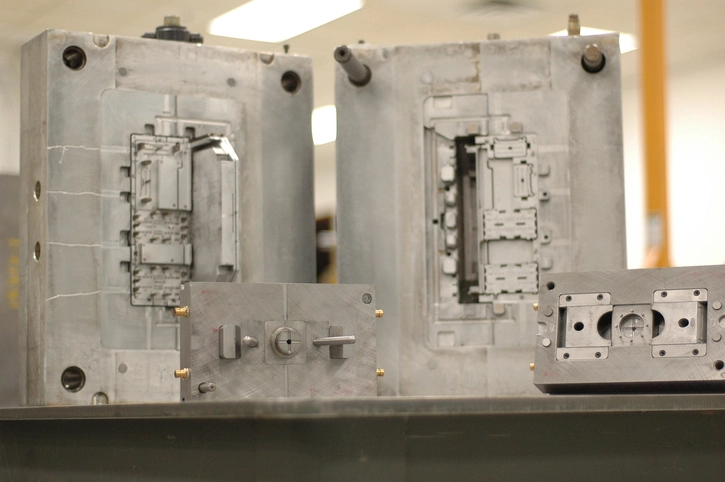
An injection mold forms plastic parts using precisely machined cavities and cores. If a molded feature needs to change after the first samples are produced, the mold may need to be modified to accommodate the new dimensions. Removing steel can make certain corrections relatively straightforward, while adding steel may require welding, replacement components, or more extensive tooling work.
Also called metal-safe design, this approach involves planning the mold geometry around potential adjustments before machining begins. Rather than assuming every dimension will be correct on the first try, the designer identifies features that may need refinement and considers how the tool can accommodate those changes.
Steel-safe design does not mean making every feature adjustable or leaving excessive material throughout the mold. It means preserving a practical correction path for dimensions where flexibility is likely to be useful.
Why is steel-safe design important during product development?
A CAD model can communicate the intended geometry of a part, but the first molded samples provide evidence of how the design, material, and manufacturing process work together. Shrinkage, cooling, material flow, and other factors can affect the final dimensions. Testing may also reveal that a feature needs to change to improve fit, strength, or function.
Without a plan for tooling adjustments, even a relatively small design change can require significant rework. Depending on the mold and the feature involved, a correction could require welding, machining a replacement insert, or manufacturing a new mold component.
Steel-safe design gives product developers another option. If a feature needs to move in the direction the mold was designed to accommodate, the tool may be modified without starting over.
This can be especially useful for startups, which may still be validating their product’s dimensions, assembly, and performance. Planning for likely adjustments can help teams manage tooling costs and reduce the risk of avoidable delays. It does not eliminate the need for testing, but it can make some of the changes that follow testing easier to handle.
How does steel-safe injection molding work?
Steel-safe injection molding begins with decisions made during mold development. The designer identifies selected dimensions that may require adjustment, examines how the mold forms those features, and determines whether material can be removed from the appropriate surface to correct them.
The important consideration is the direction of the potential change. The mold needs to retain enough material in the right location for a future correction to remain possible. If the tool is machined beyond the intended dimension, simply removing more steel may not solve the problem.
The strategy must also account for neighboring features. A change that improves one dimension could affect another if both depend on the same mold surface or component. For this reason, steel-safe planning works best when it is tied to specific dimensions and a clear understanding of the mold geometry.
How does steel-safe design affect internal and external features?
Internal and external features generally require different approaches because they are formed by different parts of the mold.
Consider an external post or boss that may need to be larger. The mold cavity can sometimes be designed so that removing steel from the appropriate surface allows the finished feature to grow. If the post is already too large, however, making it smaller may require adding material to the tool or replacing a component.
An internal hole presents the opposite situation. A hole that needs to be smaller can sometimes be corrected by removing material from the core that forms it. Making the hole larger may require a different modification strategy because the core would need to gain material.
These examples illustrate the underlying principle, but they are not universal rules. Draft angles, adjacent features, parting lines, and the way the mold is assembled can affect which correction is practical. The mold designer needs to evaluate each feature individually.
Can every mold feature be designed to be steel safe?
No. Some features are easier to adjust than others, and certain dimensions may not have a straightforward steel-removal solution.
Complex geometry can make a correction difficult when several features depend on the same surface. Features formed across a parting line or by moving mold components may also involve additional alignment and fit considerations.
When a feature could need adjustment in either direction, a replaceable mold insert may be a better option. A replaceable insert can make future changes more manageable when the design or required dimensions are still uncertain. In other cases, welding or more extensive tooling modifications may remain necessary.
The goal is not to make every possible change easy. It is to identify the most consequential uncertainties and choose a tooling strategy that addresses them.
Which part features should be considered for steel-safe design?
The best candidates are generally features that may change during product development or dimensions that are difficult to predict precisely before the first molded samples are available.
Bosses and posts, for example, may need dimensional adjustments after strength testing or assembly evaluation. Holes and openings may need refinement to accommodate fasteners or mating components. Ribs and wall sections can also be worth reviewing if their dimensions are still being evaluated for strength, stiffness, or manufacturability.
Features that control how multiple components fit together deserve particular attention. A small dimensional difference can affect alignment, movement, or assembly, making these features important candidates for early tooling discussions.
Sealing surfaces and other function-critical dimensions may also warrant consideration. However, their correction strategy needs to account for all the dimensions involved in the fit, not just one isolated measurement.
Not every uncertain feature needs to be steel safe. Designers should weigh the likelihood of a change, the consequences of getting the dimension wrong, and the practical cost of modifying the mold later.
When should you use steel-safe design in mold development?
Steel-safe design is most useful when a team can identify specific dimensions that may need refinement after tooling is built. The earlier these possibilities are discussed, the more options the mold designer has for accommodating them.
Consider steel-safe planning when:
- A product is still undergoing design validation. Testing may reveal that a boss, rib, hole, or other feature needs a dimensional adjustment.
- Molded dimensions are difficult to predict precisely. Material shrinkage and part geometry can introduce uncertainty that becomes clearer after the first molding trials.
- Components need to fit together accurately. Mating features may require refinement once the parts are molded and assembled.
- The design is likely to evolve. A startup may need to make changes based on testing, customer feedback, or assembly results.
- Tooling changes could disrupt the schedule. Preserving a correction path may reduce the work required for certain modifications.
Steel-safe design may be less important when a part is already well validated, its dimensions are established, and the likelihood of meaningful changes is low. Even then, critical dimensions should be reviewed during mold development.
The decision should be based on the risks associated with the specific part, rather than treating steel-safe design as a mandatory feature of every injection mold.
How does material selection affect steel-safe design?
Material selection is an important part of the planning process because plastic shrinkage varies with the resin, its grade, the part’s geometry, and the conditions under which it is molded.
Standard material shrinkage data can help establish expectations, but it cannot predict every dimension of a complex production part. Wall thickness, melt flow, packing pressure, cooling, and constraints within the geometry can all influence the final result.
Reinforced materials introduce additional considerations. For example, glass-filled plastics can shrink differently along the direction of melt flow than they do across it. The orientation of the fibers and the location of the gate can therefore affect the dimensions of the finished part.
These variables make it important to evaluate material selection alongside mold design. A steel-safe allowance should be based on the specific material, geometry, and dimensional requirements rather than a generic assumption about an entire family of plastics.
Designers should also consider any post-molding requirements, such as conditioning or annealing, that could affect the dimensions used for final acceptance. Understanding these factors before tooling is built can help the team make more informed decisions about which dimensions need a planned correction path.
What are the limitations of steel-safe mold design?
Steel-safe design provides flexibility, but it is not a substitute for sound part design, appropriate material selection, or process control.
First, removing steel to correct a dimension can affect neighboring features. If several dimensions depend on the same mold surface, a change intended to improve one measurement could make another worse. The correction strategy must account for those relationships.
Second, steel-safe planning cannot solve every dimensional problem. If a part varies significantly from one molding cycle to another, modifying the tool may shift the average dimension without resolving the underlying inconsistency. It may be smart to investigate material variation, cooling, processing conditions, and measurement methods before changing the mold.
Third, preserving too much material is not automatically beneficial. Excessive allowances can make the initial samples less representative of the intended part and may complicate the evaluation process.
Finally, some corrections require adding material to the tool rather than removing it. Depending on the feature and mold construction, that may involve welding, a replacement insert, or a more substantial modification.
You can best understand steel-safe design as a targeted risk-management strategy. It can make certain changes easier, but the right approach depends on the geometry, material, and requirements of the finished part.
How can you plan for steel-safe design before building a mold?
The most effective approach is to identify critical dimensions and potential design changes during the design-for-manufacturability review, before mold machining begins.
Start by identifying which dimensions control important functions, such as fit, alignment, sealing, or movement. Then consider which of those dimensions are most likely to change after testing and how difficult a correction would be if the tool were not designed to accommodate it.
Review the proposed material and its expected shrinkage behavior alongside the part geometry. Discuss how the mold forms each critical feature and whether the relevant surface can be modified without compromising adjacent dimensions.
It also helps to document the intended correction strategy. For each selected feature, the team should understand which mold component forms it, what kind of change may be needed, and whether the tool can accommodate that change through steel removal or a replaceable insert.
Once the first molded samples are available, measure the relevant dimensions and compare the results with the part requirements. Before modifying the tool, confirm that the measurements are reliable and determine whether the issue comes from a consistent dimensional offset or variation in the molding process.
This step matters because steel removal changes the tool geometry, but it does not correct an unstable process. A planned evaluation and correction process helps the team make tooling decisions based on evidence rather than reacting to a single measurement.
How can Rex Plastics help with steel-safe mold development?
Steel-safe planning is most valuable when it starts before building the mold. By identifying critical dimensions, considering material behavior, and discussing likely design changes early, product developers can make more informed decisions about their tooling design. Discussing uncertain features before mold construction gives the team an opportunity to determine which dimensions may benefit from steel-safe planning and where another tooling strategy might make more sense.
Rex Plastics can help evaluate part geometry, material considerations, manufacturing requirements, and potential tooling adjustments during product development. Contact our team for a quote today!
Frequently Asked Questions
| Question | Answer |
Does steel-safe design make a mold more expensive? |
It depends on the mold design and the planned adjustments. Steel-safe features may require additional planning or tooling considerations, but they can reduce the cost of certain modifications later. |
Can a steel-safe mold be changed after production begins? |
Some features can be modified after production begins, but the change must be evaluated for its effects on part dimensions, function, and quality. Significant changes may require additional validation before production resumes. |
Is steel-safe design the same as designing for manufacturability? |
No. Design for manufacturability considers the broader feasibility of producing a part consistently and efficiently. Steel-safe design is a more specific strategy for preserving options to correct selected mold dimensions after initial samples are evaluated. |
How does steel-safe design affect mold maintenance? |
Steel-safe design primarily addresses planned dimensional adjustments during development. Routine mold maintenance focuses on wear, cleaning, repair, and preserving tool performance. Be sure to consider both when planning for the mold’s service life. |
Referencing content from this page?
Please attribute either https://rexplastics.com/ or https://rexplastics.com/product-development/steel-safe-design/
Suggested Citation:
Rex Plastics. (2026, October 13). When to Use Steel-Safe Design in Mold Development. https://rexplastics.com/product-development/steel-safe-design/