
- BY nwmcadmin
- POSTED IN Plastic Injection Molding, Product Development
- WITH 0 COMMENTS
- PERMALINK
- STANDARD POST TYPE
When a plastic component is designed and manufactured, each individual dimension has an acceptable range of variation. In a multi-part assembly, however, those small variations can combine and affect how the finished product fits and functions. This is known as tolerance stack up.
Tolerance stack up is especially important for injection molded plastic assemblies because multiple factors can influence part dimensions, including material shrinkage, processing conditions, cooling, and mold design. Understanding how these variations interact can help designers avoid assembly problems while preventing the unnecessary use of overly tight tolerances.
What is tolerance stack up?
Tolerance stack up refers to the combined effect of dimensional variations across multiple features or components in an assembly. Rather than evaluating each dimension independently, engineers consider how those dimensions interact and affect the final fit or function of the product.
For example, imagine two injection molded components that need to fit together. Each part may be manufactured within its specified dimensional tolerances, but if both parts happen to fall toward opposite ends of their allowable ranges, the resulting assembly may have too much clearance or not enough clearance to fit properly.
This is why designing a multi-part plastic assembly requires looking beyond the tolerances of individual components. The goal is to understand how dimensional variation across the entire assembly can affect its final performance.
Why is tolerance stack up important for injection molded plastic parts?
Injection molding is capable of producing highly repeatable components, but molded parts naturally experience some dimensional variation. Material shrinkage, processing conditions, cooling rates, mold temperature, and part geometry can all influence the final dimensions of a component.
When multiple molded parts are assembled, these variations can accumulate. A small difference in the location of a hole on one component combined with a small difference in the location of a corresponding boss on another can make assembly more difficult, even though both individual parts are within specification.
Problems caused by tolerance stack up can include gaps between components, excessive interference, misalignment, loose fits, difficult assembly, and failures of functional features. Identifying these risks during design can prevent costly changes after tooling and production have begun.
Which dimensions contribute to tolerance stack up?
Not every dimension on a plastic part has an equal effect on assembly. Tolerance stack up primarily concerns dimensions that influence the location, fit, or function of mating features.
How do individual part dimensions contribute to this?
Dimensions that establish distances between important features can contribute to the overall variation of an assembly. These may include the location of holes, bosses, slots, walls, snap fits, or other mating features. Read more about bosses in our informative article here.
For example, if a plastic cover must fit over a molded base, the dimensions controlling the location of the cover’s alignment features and the corresponding features on the base may all contribute to the final fit. Each dimension can vary within its tolerance, and those variations can combine when the parts are assembled.
Why do feature locations matter in multi-part assemblies?
The location of a feature can be just as important as its size. A hole and its corresponding boss may both have acceptable diameters, but their positions relative to one another must also be controlled for the components to assemble correctly.
This is particularly important for fastener holes, alignment pins, snap fits, and other features that must line up between multiple parts. When several positional dimensions are involved, their combined variation can create an assembly problem even when each individual feature is within tolerance. Read more about snap closures here.
How does injection molding affect tolerance stack up?
Injection molded parts can experience dimensional changes throughout the molding process. As molten plastic cools and solidifies, it shrinks. The amount and direction of shrinkage depend on the material, part geometry, processing conditions, and other factors. We have an in-depth blog about shrinkage here for reference.
Warpage can introduce additional dimensional variation, particularly in large, thin, or asymmetrical components. Changes in mold temperature, cooling conditions, or processing parameters can also affect part dimensions from one production run to another. Read more about warping in our blog here.
Mold design and tooling condition are additional considerations. Properly designed tooling can help maintain dimensional consistency, but designers should still establish tolerances that reflect the capabilities of the molding process rather than assuming every molded dimension can be held to extremely tight specifications.
What is tolerance analysis and how does it help?
Tolerance analysis is the process of evaluating how dimensional variation can affect the fit and function of an assembly. Instead of looking at each tolerance separately, engineers identify the dimensions that contribute to a particular assembly requirement and calculate their combined effect.
Tolerance analysis can help determine whether a design will function properly across the expected range of manufacturing variation. It can also identify which dimensions have the greatest influence on assembly performance.
This information allows designers to focus tighter tolerances where they actually matter rather than applying unnecessarily strict requirements to every feature. The result can be a better balance between performance, manufacturability, and production cost.
What is worst-case tolerance analysis?
Worst-case tolerance analysis assumes that every relevant dimension reaches its least favorable limit at the same time. For an assembly requiring a minimum amount of clearance, for example, the analysis would consider the combination of dimensions that produces the smallest possible clearance.
This approach provides a conservative assessment because it assumes the most unfavorable combination of tolerances. It can be appropriate for critical assemblies where failure cannot be accepted, but it may also lead to tighter tolerances and higher manufacturing costs than are necessary for less demanding applications.
What is statistical tolerance analysis?
Statistical tolerance analysis considers the probability that different dimensional variations will occur together. Instead of assuming every feature will simultaneously reach its worst-case limit, it uses expected variation to estimate how an assembly is likely to perform across a larger production population.
This approach can provide a more realistic representation of typical manufacturing conditions when sufficient production data and appropriate assumptions are available. It can also help prevent designers from specifying unnecessarily tight tolerances simply to account for an extremely unlikely combination of dimensional extremes.
The appropriate analysis method depends on the application, the number of dimensions involved, the required reliability, and the amount of manufacturing data available.
How can designers reduce tolerance stack up problems?
The best way to manage tolerance stack up is to consider it during the design process rather than waiting until assembled parts reveal a problem. Designers can often improve assembly performance through a combination of appropriate tolerances, feature placement, and part geometry.
Can tighter tolerances solve tolerance stack up?
Tighter tolerances can reduce dimensional variation, but they are not always the best solution. Requiring every feature to stay within an extremely narrow tolerance range can increase tooling costs, inspection requirements, production time, and scrap.
Instead, designers should identify which dimensions actually affect the critical function of the assembly. Those dimensions may require tighter control, while less important features can often use more practical tolerances.
The goal is not to eliminate all dimensional variation. It is to control the variation that matters.
How can datum and reference features improve assembly accuracy?
Establishing consistent reference features can help control how dimensions relate to one another. A well-planned dimensional scheme gives manufacturers and inspectors clear points from which important features can be located and measured.
For multi-part assemblies, designers should also consider how mating features relate to the functional requirements of the finished product. Referencing critical features appropriately can help reduce unnecessary accumulation of dimensional variation.
Can part geometry be designed to accommodate dimensional variation?
Yes. In many cases, the geometry of an assembly can be designed to tolerate a reasonable amount of dimensional variation rather than requiring extremely tight tolerances.
Clearance, alignment features, lead-ins, and self-aligning features can all help components assemble more easily. Snap fits and other flexible features can also be designed to accommodate expected variation while maintaining the necessary retention force.
The best solution depends on the application, but designing some flexibility into an assembly can be more practical than attempting to hold every molded dimension to an extremely narrow range.
What are some common examples of tolerance stack up in plastic assemblies?
Tolerance stack up can occur in nearly any product containing multiple mating plastic components. Some common examples include:
- Two-piece plastic housings: Variation in the dimensions of a cover and base can create excessive gaps or interference along the assembly.
- Bosses and fasteners: Variation in the location of molded bosses and corresponding holes can make screw assembly difficult.
- Snap-fit components: Dimensional differences between mating features can affect insertion force, retention, or the ability to assemble the parts.
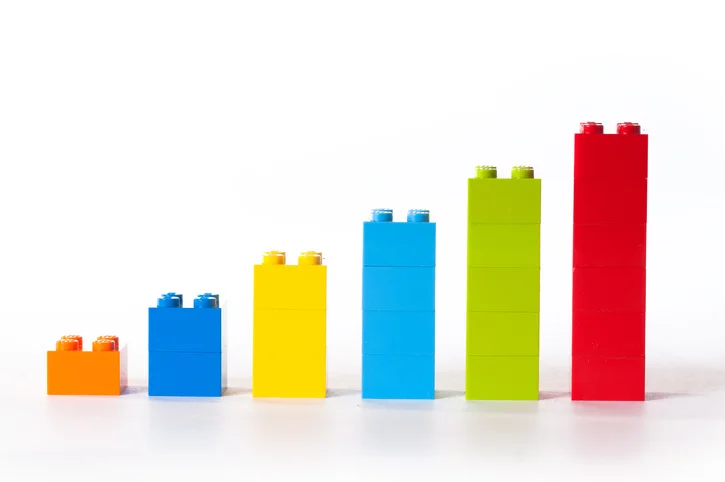
- Stacked components: When several plastic components are positioned on top of one another, small dimensional variations can accumulate and shift the location of the final component.
- Alignment features: Variation in the location of pins, slots, or other alignment features can prevent components from fitting together correctly.
These examples demonstrate why individual part inspection does not always tell the complete story. A component can meet its drawing requirements and still contribute to an assembly that does not function as intended.
When should tolerance stack up be considered during product development?
Tolerance stack up should be evaluated early in product development, particularly when a product contains multiple mating components or features with critical dimensional relationships. Waiting until after tooling has been completed can make it much more difficult and expensive to correct an assembly issue.
Designers should identify the dimensions that are critical to fit and function, establish realistic tolerances, and evaluate how those dimensions interact before finalizing the design. This process can help balance product performance with the realities of injection molding.
At Rex Plastics, we consider more than whether an individual plastic part can be molded successfully. We also look at how components will fit, align, and function as part of the finished assembly. From product development and mold design through production, our team can help identify tolerance considerations early and develop practical solutions for reliable, repeatable assemblies. Contact us today to learn how we can help you bring your plastic project to life.
Frequently Asked Questions
| Question | Answer |
Does tolerance stack up apply to flexible plastic parts? |
Yes. Flexible parts can still experience dimensional variation, and that variation can affect how components fit or function together. Flexibility may help an assembly accommodate some variation. However, it should not be relied upon to compensate for an uncontrolled tolerance stack up. |
Can temperature changes affect tolerance stack up in plastic assemblies? |
Yes. Plastic materials can expand or contract as temperatures change. If an assembly operates across a wide temperature range, designers should consider how thermal expansion could affect clearances, interference, and the relationship between mating components. |
How do material shrink rates affect assembly tolerances? |
Different plastics shrink at different rates as they cool during injection molding. Material selection can therefore influence the final dimensions of molded components and should be considered when establishing tolerances for parts that must fit together. |
Can tolerance stack up be tested with prototypes before production? |
Yes. Prototypes can help identify potential fit and alignment problems before production tooling is completed. However, prototype materials and manufacturing methods may behave differently from production injection molded parts, so final tolerance decisions should account for the actual production process. |
Referencing content from this page?
Please attribute either https://rexplastics.com/ or https://rexplastics.com/plastic-injection-molding/tolerance-stack-up/
Suggested Citation:
Rex Plastics. (2026, August 15). How Tolerance Stack Up Affects Multi-Part Plastic Assemblies. https://rexplastics.com/plastic-injection-molding/tolerance-stack-up/