
- BY nwmcadmin
- POSTED IN Plastic Injection Molding
- WITH 0 COMMENTS
- PERMALINK
- STANDARD POST TYPE
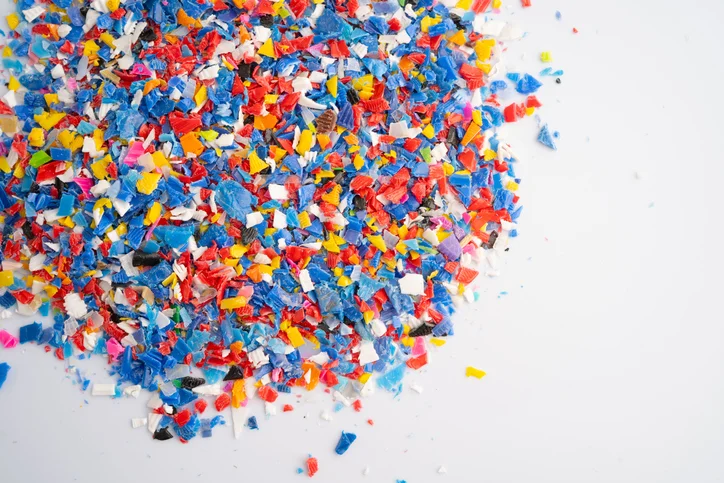
Regrind can be a useful option for injection molded plastic parts, but it is not automatically appropriate for every application. Reusing production scrap can reduce material waste and, in some cases, material costs. However, regrind can also behave differently from virgin resin depending on the plastic, its processing history, and the requirements of the finished part.
For designers and manufacturers, the key is understanding when regrind makes sense and how it can affect part performance. Evaluating these factors early in the product development process can help prevent unexpected changes in appearance, dimensions, or mechanical properties.
What is regrind in injection molding?
Regrind is plastic material that has already been processed and then ground into smaller pieces so it can potentially be reused. In injection molding, this material can come from runners, sprues, gates, setup material, rejected parts, or other production scrap.
Regrind is sometimes used interchangeably with recycled plastic, but the terms can describe different materials. Regrind typically refers to material being reclaimed from a manufacturing process, while recycled plastic can also refer to material recovered from post-consumer or post-industrial sources and processed into resin for another application.
The source and processing history of the material matter. A manufacturer that collects and regrinds its own clean production scrap has more control over the material than one working with material that has passed through multiple recycling or processing steps.
How is regrind material used in injection molding?
Regrind is commonly incorporated into injection molding material by blending it with virgin plastic. The appropriate amount depends on the material, the application, the previous processing history, and the performance requirements of the finished part.
Using a controlled blend can allow manufacturers to reuse suitable production scrap while maintaining the characteristics needed for the part. The exact approach should be established based on the material and application rather than assuming that one regrind percentage will work for every project.
How is plastic scrap prepared for reuse?
Before plastic scrap can be reused, it needs to be collected and separated according to material. Keeping different polymers, colors, and material grades separate helps prevent contamination that could affect processing or finished-part performance.
The material is then ground into smaller pieces using equipment such as a granulator. Manufacturers also need to consider particle size, cleanliness, storage, and moisture. Consistent preparation helps the regrind feed and process more predictably during molding.
Closed-loop recycling can provide additional control because production scrap can be collected and reused within the same manufacturing operation. For example, runners and sprues from a cold-runner mold may provide material that can be reground and returned to the process.
Is regrind mixed with virgin plastic?
Regrind is often blended with virgin resin rather than used on its own. Virgin material can help maintain consistent processing and finished-part properties while allowing a portion of suitable scrap to be reused.
The appropriate blend ratio varies by material and application. A part with demanding mechanical, dimensional, or cosmetic requirements may require a different approach from a less demanding application. The important consideration is maintaining a consistent, controlled material composition.
What are the benefits of using regrind?
When the material and application are appropriate, regrind can provide practical manufacturing benefits. The most obvious is that suitable production scrap can be returned to the manufacturing process instead of being discarded.
Regrind can also reduce the amount of virgin resin required for some parts. Depending on material costs and the manufacturing process, this may help reduce material expenses while making better use of plastic already present in the production cycle.
Can regrind reduce plastic waste?
Yes. Regrinding suitable production scrap allows material such as runners, sprues, gates, and rejected parts to be reused rather than immediately discarded.
This can be particularly useful in processes that generate significant amounts of scrap. Cold-runner injection molding, for example, produces runners that can potentially be collected and reground when the material and application allow it.
However, not every piece of scrap should automatically go back into production. Material that has been contaminated, mixed with another polymer, or degraded through processing may not be suitable for reuse.
Can regrind reduce material costs?
Regrind can reduce the amount of virgin resin needed for some applications, which may lower material costs. The actual savings depend on the material, the percentage of regrind used, and the cost of processing and managing the reclaimed material.
Cost should not be the only consideration. If using regrind creates unacceptable variation in part quality or performance, any material savings may be outweighed by production problems or rejected parts.
Does regrind affect plastic properties?
It can. Plastic undergoes thermal and mechanical stresses during processing, and repeated processing can change the characteristics of some materials. The extent of those changes depends on the polymer and how the material was previously processed.
Regrind may affect properties such as molecular weight, viscosity, impact resistance, mechanical strength, color, flow behavior, and thermal performance. These changes are not necessarily significant for every material or application, but they should be considered when performance requirements are tight.
Particle size and moisture can also affect processing. Inconsistent or poorly prepared regrind may feed differently through the molding equipment or contribute to variations in viscosity, part weight, dimensions, shrinkage, or warping.
Glass-filled materials require particular attention. Grinding can shorten reinforcing fibers, and repeated processing can further affect the material’s mechanical performance. For applications that depend on strength, stiffness, or dimensional stability, the effect of regrind should be evaluated rather than assuming a standard blend ratio is appropriate.
Which plastics can be used as regrind?
Many common injection molding materials can potentially be reground and reused, including materials such as ABS, polypropylene, polyethylene, nylon, and polycarbonate.
That does not mean every grade of these materials can be reused under every circumstance. The suitability of regrind depends on the material’s processing history, whether it has been kept free from contamination, and what the finished part needs to accomplish.
Material identification is especially important. Mixing different polymers or grades can create processing and performance problems, so production scrap should be properly separated before it is considered for regrind.
When should regrind not be used?
Regrind may not be appropriate when a part requires highly consistent mechanical properties, appearance, dimensions, or material characteristics. Applications with strict specifications or demanding service conditions may require greater control over the resin than regrind can provide.
Food-contact, medical, safety-critical, or other regulated applications may also have specific material requirements that limit whether reclaimed material can be used. Customer specifications can impose additional restrictions.
Highly cosmetic parts may present another challenge. Changes in color, surface appearance, or material consistency can be more noticeable on visible components, particularly when the regrind comes from parts or material with different colors or processing histories.
The decision is ultimately application-specific. Regrind is not inherently unsuitable for demanding parts, but the material requirements need to be evaluated before it is incorporated into the design or production process.
How can manufacturers maintain consistent quality?
Consistency starts with material control. Regrind should be separated by polymer and grade and protected from contamination. Equipment used to grind and handle the material should also be kept clean so different materials do not become mixed.
Manufacturers should establish a controlled regrind percentage and maintain that ratio throughout production. Processing conditions may also need to be adjusted to account for the characteristics of the material blend.
Monitoring the molding process can help identify changes in flow, part weight, dimensions, appearance, or other characteristics. For applications with tighter requirements, testing can provide additional confirmation that the material continues to meet the specifications for the finished part.
The goal is not simply to use as much regrind as possible. It is to use an appropriate amount while maintaining the consistency and performance the application requires.
Can regrind be used in every project?
No. Whether regrind is appropriate depends on several factors, including the type of plastic, the part’s function, appearance requirements, dimensional tolerances, mechanical requirements, service environment, and any applicable regulatory or customer specifications.
A relatively simple industrial component may have considerably more flexibility than a highly cosmetic or performance-critical component. Two parts made from the same polymer could therefore have different requirements for regrind.
This is why regrind should be considered as part of the overall material and manufacturing strategy rather than treated as a universal substitute for virgin resin.
What should designers consider before specifying regrind?
Designers should first determine whether the project requires recycled content or whether regrind is simply an option for the manufacturer. Those are different requirements. If a specific percentage of recycled or reclaimed material is required, that should be established before production and reflected in the material specifications.
The finished part’s performance requirements should also be clearly defined. Consider mechanical strength, impact resistance, appearance, dimensional stability, tolerances, operating environment, and expected service life.
It is also worth discussing regrind with the injection molder before finalizing the material specification. The manufacturer can help determine whether the proposed material and regrind strategy are compatible with the molding process and the requirements of the finished part.
Clear communication is particularly important when a customer requires a specific resin grade or material composition. The drawing, material specification, and manufacturing requirements should all align so there is no uncertainty about what material is acceptable.
How can Rex Plastics help determine whether regrind is appropriate?
Regrind can be a practical way to reuse suitable production scrap, but it needs to be evaluated in the context of the finished part. Material type, processing history, appearance, mechanical requirements, dimensional requirements, and application conditions all play a role in determining whether regrind makes sense.
Rex Plastics can help evaluate these manufacturing considerations during the design and production process. By discussing material requirements early, designers can determine whether regrind is a suitable option and establish an approach that supports consistent part quality.
The right question is not simply whether regrind can be used. It is whether it can be used while still meeting the requirements of the part. Contact us today to find out if regrind materials are right for your next project.
Frequently Asked Questions
| Question | Answer |
| Can regrind be used multiple times in injection molding? | Regrind can sometimes be processed more than once, but repeated heating and processing can gradually affect certain plastic properties. How much reprocessing a material can tolerate depends on the polymer, processing conditions, and part requirements. |
| Does regrind change the color of a plastic part? | It can. Regrind from parts or scrap with different colors can affect the appearance of the finished part, particularly when blended into a lighter or more consistent color. For cosmetic applications, color consistency should be considered when determining whether regrind is appropriate. |
| Can regrind be used in food-contact plastic parts? | Regrind may be restricted in food-contact applications because these parts can have specific requirements for materials and processing. Whether it is permitted depends on the applicable regulations, material specifications, and how the regrind was generated and handled. |
| How much regrind can be added to injection molding material? | There is no universal percentage that works for every material or application. The appropriate amount depends on the polymer, its processing history, and the performance requirements of the finished part. The regrind percentage should be established and controlled as part of the manufacturing process. |
Referencing content from this page?
Please attribute either https://rexplastics.com/ or https://rexplastics.com/plastic-injection-molding/using-regrind-or-recycled-materials/
Suggested Citation:
Rex Plastics. (2026, September 19). Using Regrind or Recycled Materials in Injection Molding. https://rexplastics.com/plastic-injection-molding/using-regrind-or-recycled-materials/