

- BY Rex Plastics
- POSTED IN Product Development
- WITH 1 COMMENTS
- PERMALINK
- STANDARD POST TYPE
Part manufacturers should always give careful consideration to the materials used in plastic part design, as this decision will have significant consequences for sink and warp in plastic injection-molded parts. Let’s take a look at what makes a part sink or warp, and some helpful advice for avoiding these in the injection molding and design process.
What is sink in injection molding?
Sink marks in plastic parts are small depressions or dimples that appear on the surface. They are most often caused by localized thick sections that cool and shrink more slowly than surrounding areas.
During the cooling stage of a plastic injection-molded part, the plastic first solidifies at the mold surface and moves inward toward the center. If the plastic is too thick, the center will stay molten for an increased period of time. This causes an inward-pulling stress to develop, which leads to sink marks on the outer surfaces of the part.
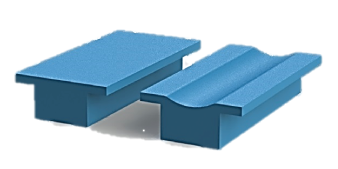
In the image above, notice the sink marks on the part shown to the right.
How can I prevent sink in plastic parts?
In general, sink can be reduced by:
- Keeping wall thickness as uniform as possible (because it cools more evenly)
- Avoiding sharp transitions (which would create stress concentrations)
- Designing gradual changes in thickness (which spread shrinkage over a larger area).
Proper packing pressure and cooling time during molding can also help minimize sink marks.
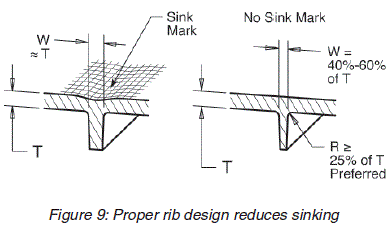
Ribs may provide stiffness for plastic injection mold parts, but also can result in sink marks on the outside of the wall. To prevent sink in plastic molded parts, the thickness of the rib should be about 60% of the thickness of the wall. This rule-of-thumb guideline should help keep sink from occurring as the part cools. Read more about ribs and bosses in our more in-depth article here.
How is warp different from sink in plastic parts?
Warp is different from sink in that it involves distortion or bending of the part rather than a surface depression. Both defects can result from uneven cooling, but warp usually affects the overall shape of the part.
Warp in plastic parts is the bending or twisting of a molded part caused by uneven cooling and internal stress. It can make the part lose its intended shape, even if the surface itself looks fine.
If uneven wall thicknesses exist in any plastic injection molded part, thinner sections will freeze faster than thicker sections, which will introduce stresses in the part between the thick and thin areas. If the stresses become excessive, the part will warp, illustrated below:
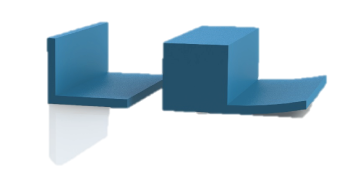
The part above on the right-hand side has a warped thinner section.
Preventing Warp in Plastic Parts
Plastic injection molded parts may experience ‘warp’ due to stresses in step transitions between wall thicknesses. One way to reduce this problem is to use a ramp instead of a sudden step. A ramp creates a gradual transition in thickness, which helps the part cool more evenly and reduces the stress concentration that can lead to sink or warp. This smoother change in geometry is generally easier for the material to fill and cool consistently.
Additionally, gussets can also help improve part stability, especially in corners or other areas that need extra strength. By reinforcing a section without adding a large mass of plastic, gussets can provide support while minimizing thick areas that would otherwise cool unevenly. When used properly, they help reduce flexing, improve rigidity, and lower the risk of warping.
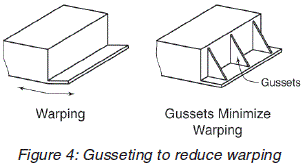
Other ways to reduce warp include keeping wall thickness uniform, avoiding abrupt changes in section thickness, and making sure the mold cools evenly across the part.
Learn More
Do you have additional questions about what it takes to create top-quality plastic injection mold parts? Please feel free to contact us by calling or emailing at any time, and be sure to take a look at our Frequently Asked Questions. Are you an established OEM, or start-up organization with plastic part manufacturing needs? Learn Why Rex is the right choice, and why choosing American manufactured parts should be a top priority.
Frequently Asked Questions
| Question | Answer |
|---|---|
What types of parts are most likely to develop sink marks or warp? |
Parts with ribs, bosses, thick-to-thin transitions, or large flat surfaces are often more vulnerable because these shapes can cool unevenly and create stress during shrinkage. |
Can the choice of plastic material affect sink and warp? |
Yes. Different resins shrink at different rates, so material selection can influence how much a part changes shape as it cools and how easily defects appear. |
Are sink and warp caused only by part design? |
No. Mold temperature, injection speed, packing pressure, and cooling time can also affect whether a part develops sink or warp during production. |
How can designers reduce the risk of these defects early in the process? |
Designers can review wall thickness, section transitions, reinforcement placement, and expected load conditions during the concept stage to help prevent problems before tooling begins. |
Referencing content from this page?
Please attribute either https://rexplastics.com/ or https://rexplastics.com/product-development/fundamentals-plastic-part-design-part-3-sink-warp/
Suggested Citation:
Rex Plastics. (2016, February 22). Fundamentals of Plastic Part Design Part 3 – Sink and Warp. https://rexplastics.com/product-development/fundamentals-plastic-part-design-part-3-sink-warp/

The blog “Fundamentals of Plastic Part Design – Part 3: Sink and Warp” provides a thorough examination of common issues faced during the injection molding process. The author clearly explains the causes and effects of sink marks and warping, offering practical solutions to mitigate these problems. This resource is invaluable for engineers and designers aiming to enhance part quality and manufacturing efficiency. Thank you for sharing these critical insights, and I look forward to more informative discussions on plastic part design in future posts!