

- BY nwmcadmin
- POSTED IN Plastic Injection Molding
- WITH 3 COMMENTS
- PERMALINK
- STANDARD POST TYPE
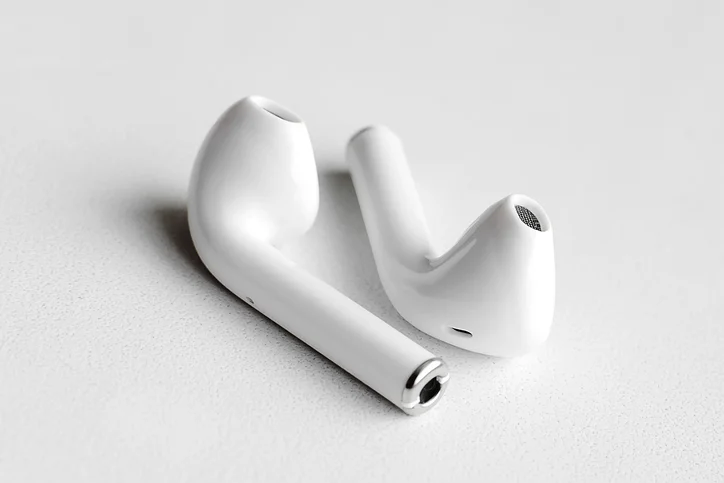
If you’re thinking of finding an alternative to plastic injection molding for your project, there are a few things you should consider during your search.
Although injection molding has higher upfront costs, you’ll be glad you invested in your product once it picks up momentum on the market. Fabrication is less expensive initially, but it limits your product when you need it most.
Today, we’re going over why injection molding is more advantageous in the long run than plastic fabrication. Luckily, if you’ve already begun a project, we can help you switch from fabrication to injection molding (details below).
Plastic Fabrication vs Injection Molding Costs
One of the most difficult obstacles preventing product developers from having their product injection molded is the initial tooling investment. At first glance, many product developers form the conclusion that plastic injection molding is too expensive. These folks are placing more importance on short-term needs, most likely during a prototyping phase, when true return on investment is realized once a new product has been brought to market and begins to gain momentum.
For a more detailed breakdown of injection molding costs, please read our informative guide here.
What is plastic fabrication?
Plastic fabrication is a general term for manually producing plastic products. Plastic fabrication may include the machining, saw cutting, laser cutting, forming, and fastening of plastic parts. It is a versatile and effective way to prototype and market test a new product with very little initial investment. However, it does not scale well in higher volume scenarios.
What are the limitations?
The limitations of plastic fabrication come into play when a product actually gains market traction— terrible timing, as this should be the goal for any new product. When this happens, the part manufacturer will experience difficulty meeting demand due to the labor-intensive nature of fabrication. With so much part-by-part labor involved, the capacity to output parts remains low. It’s at that point that people often begin to investigate plastic injection molding.
When should I consider using plastic fabrication?
Plastic fabrication is typically the best option for projects that have a low run. You don’t need to invest in tooling, which makes it ideal for prototyping, testing a product in the market, or producing small batches where precision and customization matter more than volume.
If you’re unsure whether your idea will gain traction, fabrication allows you to keep costs low while maintaining flexibility in your design. Once your product begins to scale and demand increases, however, fabrication quickly becomes less efficient compared to injection molding.
When should I consider plastic injection molding?
Plastic injection molding is the right choice once your product has proven demand and you’re ready to scale production. If you expect medium to high-volume runs, injection molding significantly lowers your per-part cost while keeping each part consistent and durable across thousands or even millions of units.
It’s also ideal when your design has been finalized, since tooling is a long-term investment that pays off as sales volume grows. In short, when you’re moving from prototype to production and need efficiency, reliability, and cost savings at scale, injection molding is the best path forward.
Case Study
Consider the following scenario:
If a product is fabricated for $2 each and has a sales volume of 500 units per month, the annual cost of production would be $12,000. If a single cavity plastic injection mold (one that produces one part each machine cycle) can be built to produce that same product for $5,000, and be produced for $.70 each, that product owner can recoup their tooling costs in less than eight months ($5,000/$1.30 savings on each part, which is just short of 4,000 parts).
At that point, the product owner’s margin increases by $1.30 per part, allowing for higher profits or the option of lowering prices to gain market share.
Contact Rex Plastics Today
Injection molding alternatives may end up limiting your product’s reach. At Rex Plastics, we are proud to have helped many product developers save money by switching their product from plastic manufacturing to plastic injection molding. Our customers are consistently able to achieve a return on their tooling investment – if their sales volume is there to support it.
If you feel you may be a candidate to convert your product manufacturing practice to plastic injection molding, please give us a call or submit this form. Rex Plastics has engineers on staff to help you determine your best path forward.
Frequently Asked Questions
| Question | Answer |
What types of plastics are commonly used in fabrication versus injection molding? |
Fabrication often uses sheet or rod stock made from plastics like acrylic, polycarbonate, and PVC, since these materials can be easily cut, drilled, or bonded. Injection molding, on the other hand, accommodates a wider variety of thermoplastics such as polypropylene, ABS, and nylon. These are melted and injected into molds to form precise, repeatable parts. |
How do lead times differ between plastic fabrication and injection molding? |
Fabrication typically offers faster turnaround for small projects since it doesn’t require mold building. Injection molding requires more upfront time to design and manufacture the mold, but once the tooling is complete, production runs are much faster and more efficient. |
Can fabricated parts be as strong as injection-molded parts? |
Fabricated parts are suitable for many applications, but injection-molded parts generally provide greater structural integrity. This is because molding creates solid, uniform pieces, while fabricated parts may rely on adhesives, fasteners, or welds. These can create weak points under stress. |
Are there size limitations for injection molding compared to plastic fabrication? |
Injection molding machines have clamping force and mold size limits, which can restrict the maximum part size. Fabrication, however, can often handle larger plastic sheets or rods. So, it may be more practical for oversized parts or components that exceed typical mold dimensions. |
What role does design complexity play in choosing between the two methods? |
Fabrication works well for simple shapes or flat parts, but can become inefficient when a design requires intricate features. Injection molding excels at producing complex geometries with fine details, undercuts, or textured surfaces. It does this all while maintaining consistency across every part produced. |
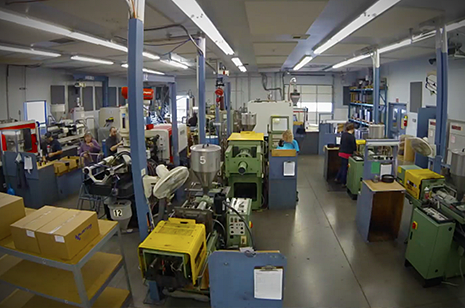

It’s interesting that you mentioned plastic injection molding being a way to keep products in demand. I have been thinking about working in manufacturing when I’m older. It would be smart to learn more about injection molding because it seems applicable to many different production areas.
Thank you for your sharing. I am worried that I lack creative ideas. It is your article that makes me full of hope. Thank you. But, I have a question, can you help me? https://accounts.binance.com/sl/register?ref=WTOZ531Y
The blog “Plastic Injection Molding vs. Alternative Fabrication” provides a thorough analysis of various manufacturing methods, effectively comparing injection molding with alternative techniques. The author highlights the strengths and weaknesses of each process, offering valuable insights for professionals in the industry seeking to make informed decisions. The clarity of the writing and depth of information make it an excellent resource for understanding when to utilize different fabrication methods. Thank you for sharing this informative piece, and I look forward to more insightful discussions on manufacturing techniques in future posts!